The problem
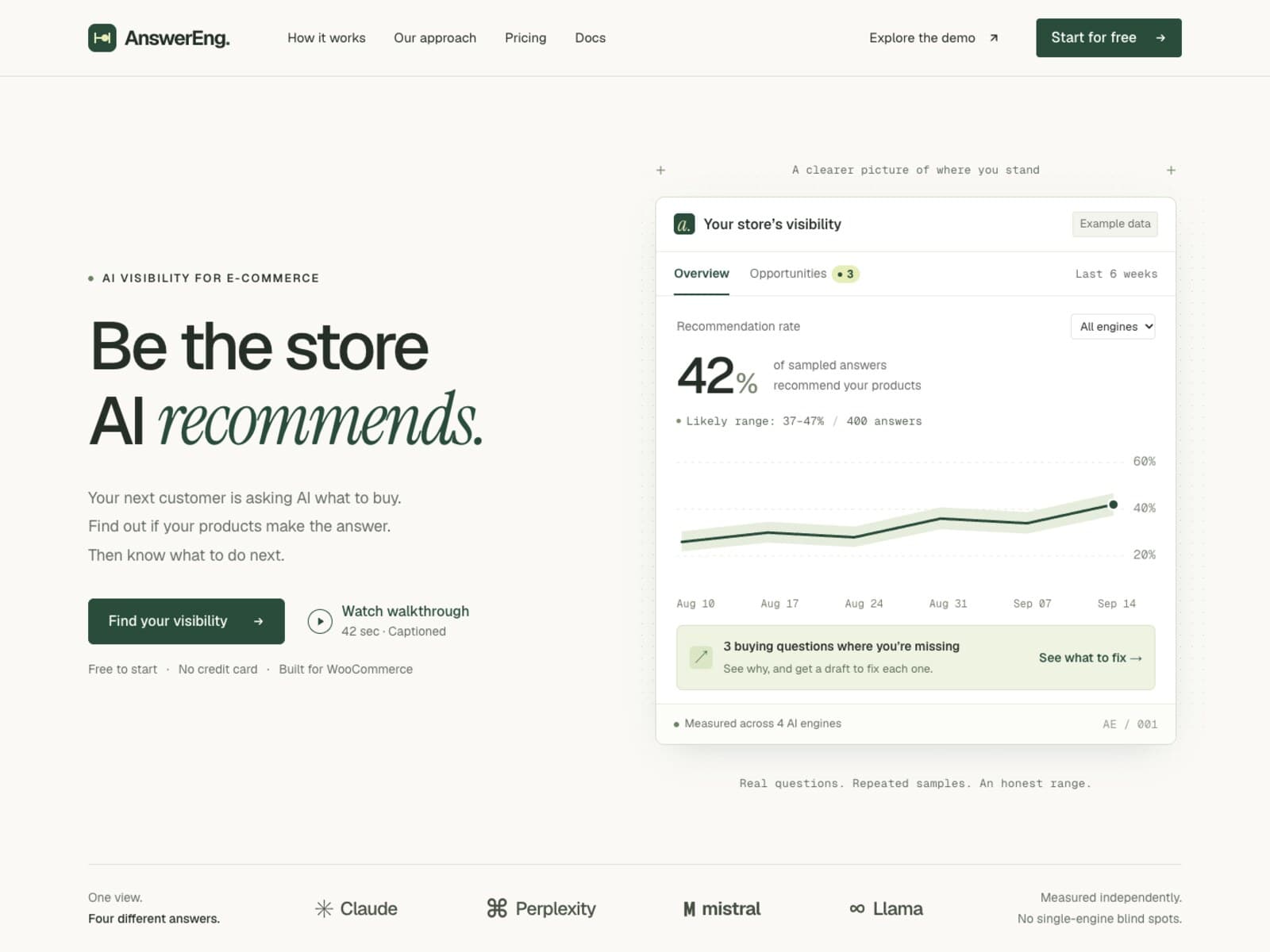
Your next customer might not search for you. They might ask ChatGPT or Perplexity "what's a good daypack for long hikes in wet weather?" and buy whatever comes back. For an online store, that answer is the new first page of search, and most store owners have no idea whether their products are in it.
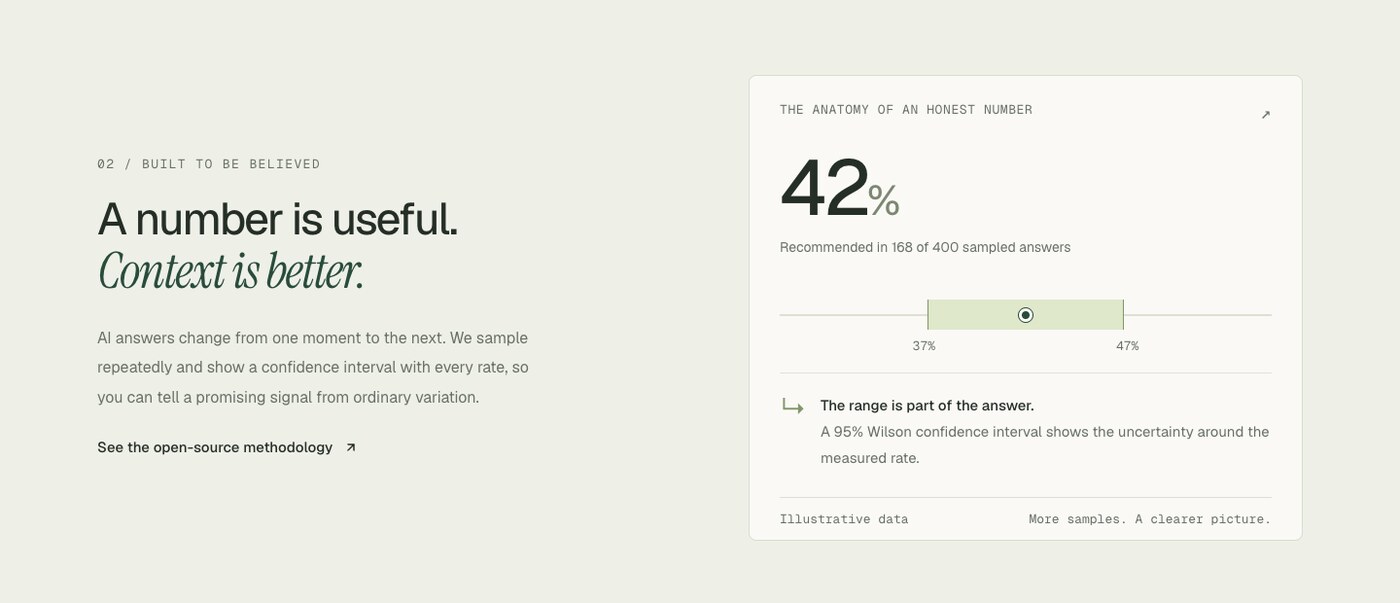
Asking once doesn't tell you either. AI answers change from one moment to the next, so a single screenshot is an anecdote, not a measurement. A store needs to know how often it's recommended, how confident that number is, and what to change when it isn't.
What we built
AnswerEng, a product that measures AI visibility properly and turns the gaps into next steps. Its first version is built for WooCommerce.
- A plugin that connects in minutes. Install it from the WordPress.org plugin directory, sign up for a free API key, paste it into the plugin, and the store's catalog syncs automatically: titles, descriptions, prices, categories, and attributes. Never customers, never orders, never images. The plugin never writes to the store; every suggested fix is a draft the owner reviews and applies by hand.
- Real questions, sampled repeatedly. AnswerEng generates the questions buyers actually ask, then puts each one to four answer engines — Claude, Llama, and Mistral on Amazon Bedrock, plus Perplexity — five times each, because one answer proves nothing.
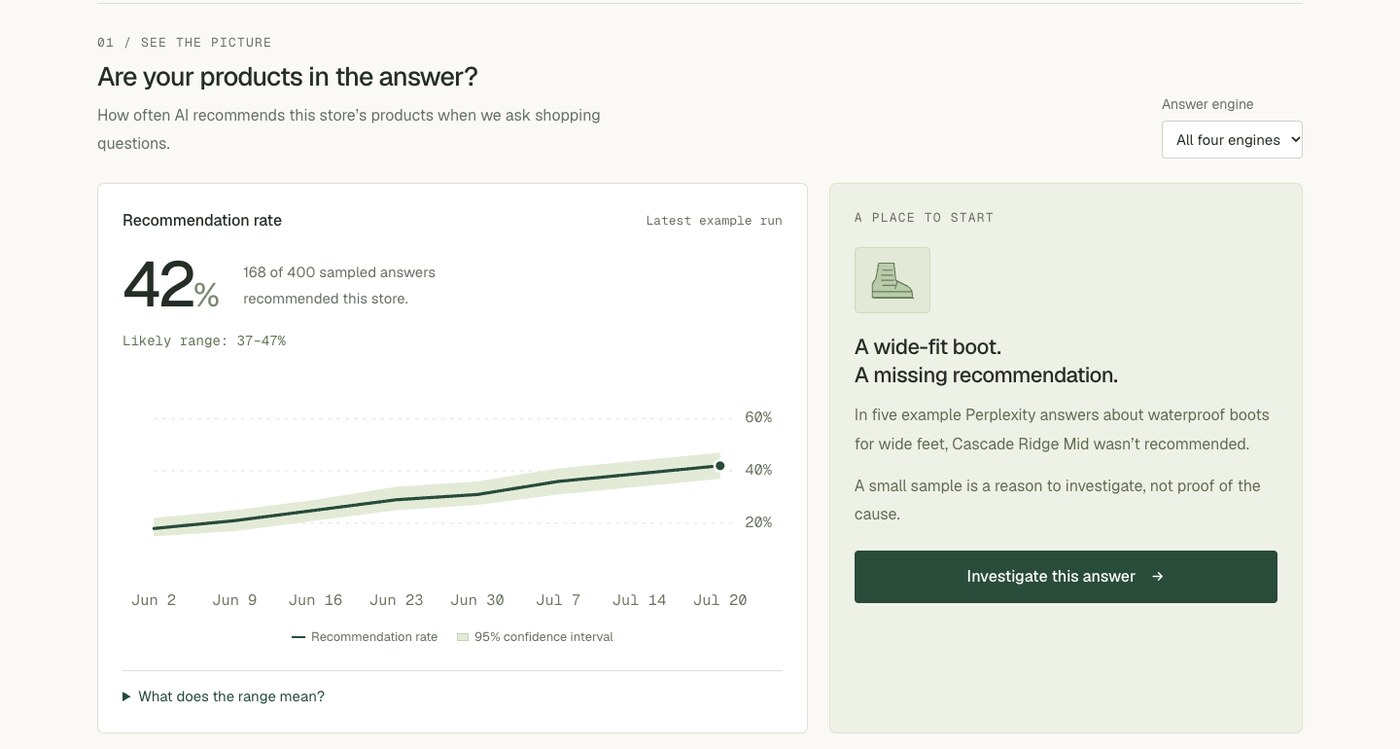
- An honest number. A separate model reads every answer and records whether the store was recommended, where it ranked, and which competitors came up instead, through a fixed schema, with malformed output marked unreadable rather than guessed. Every rate ships with a 95% confidence range, so a store can tell a real change from ordinary noise.
- Fixes, not just a score. For each buying question where the store is missing, AnswerEng drafts specific improvements to product copy, FAQs, and specs, grounded in the store's own catalog. It refuses to invent product details.
- Held to a measurement standard. The scoring model has to pass a labeled evaluation gate before any change ships; it's how we chose the current judge model. Around 1,500 automated tests cover the engine, the plugin, and the dashboard.
- Serverless, multi-tenant, and cheap to idle. AWS Step Functions orchestrates each run, with per-plan caps on how many calls a run can make, a database that scales to zero, and isolated tenants with their own keys. Billing runs through Stripe.
Status
Live at answereng.io, where anyone can start on the free plan with no credit card. AnswerEng for WooCommerce is now in the WordPress.org plugin directory — install it from wordpress.org/plugins/answereng-for-woocommerce or search “AnswerEng” under Plugins → Add New in any WordPress admin. You can click through the interactive demo with an example store, or watch the 42-second walkthrough. The statistical methodology is open source on GitHub.