The problem
S.A. Lifeline Foundation has supported individuals and families affected by sexual addiction and betrayal trauma since 2008, through free, confidential 12-step meetings, education, and community. Its website hadn't kept up with the work. Eight flat menu items gave the same weight to a donation page as to the first step someone in crisis needs to take. Years of articles and podcast episodes were hard to find. And the platform underneath was running a PHP version that had reached end of life.
The people arriving on this site are often having one of the worst weeks of their lives: someone who just admitted a problem, or someone who just discovered a betrayal. The site's first job is to tell them, quickly and gently, where to go next.
What we did
We started with an SEO and content cleanup, then rebuilt the entire site.
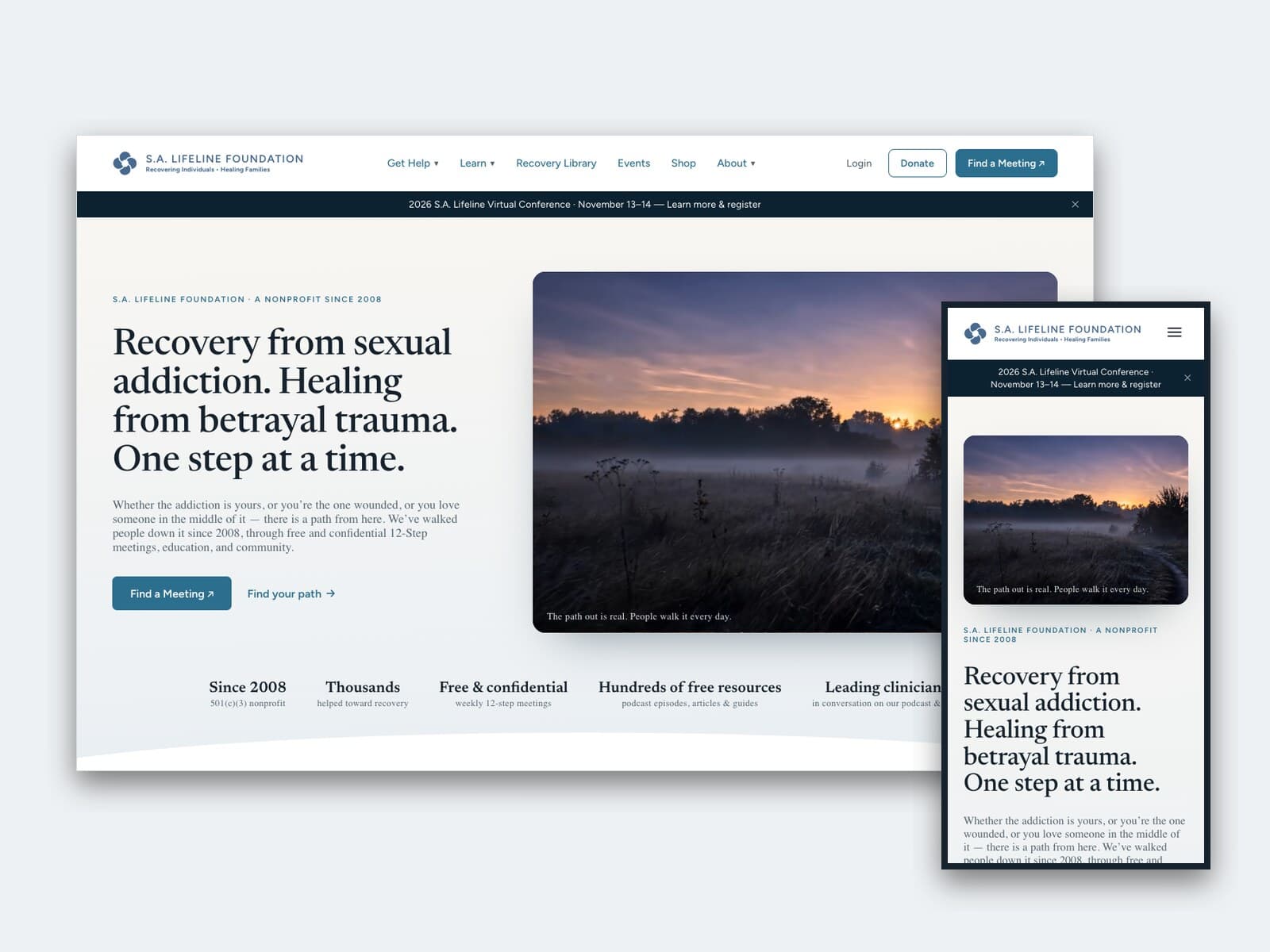
- Navigation built from evidence. Before changing the menu, we audited what visitors were actually doing in analytics. Pages people were looking for that weren't in the menu got promoted, and the navigation was reorganized around need instead of org chart: Get Help, Learn, Recovery Library, Events, Shop, and About, with Find a Meeting always one tap away.
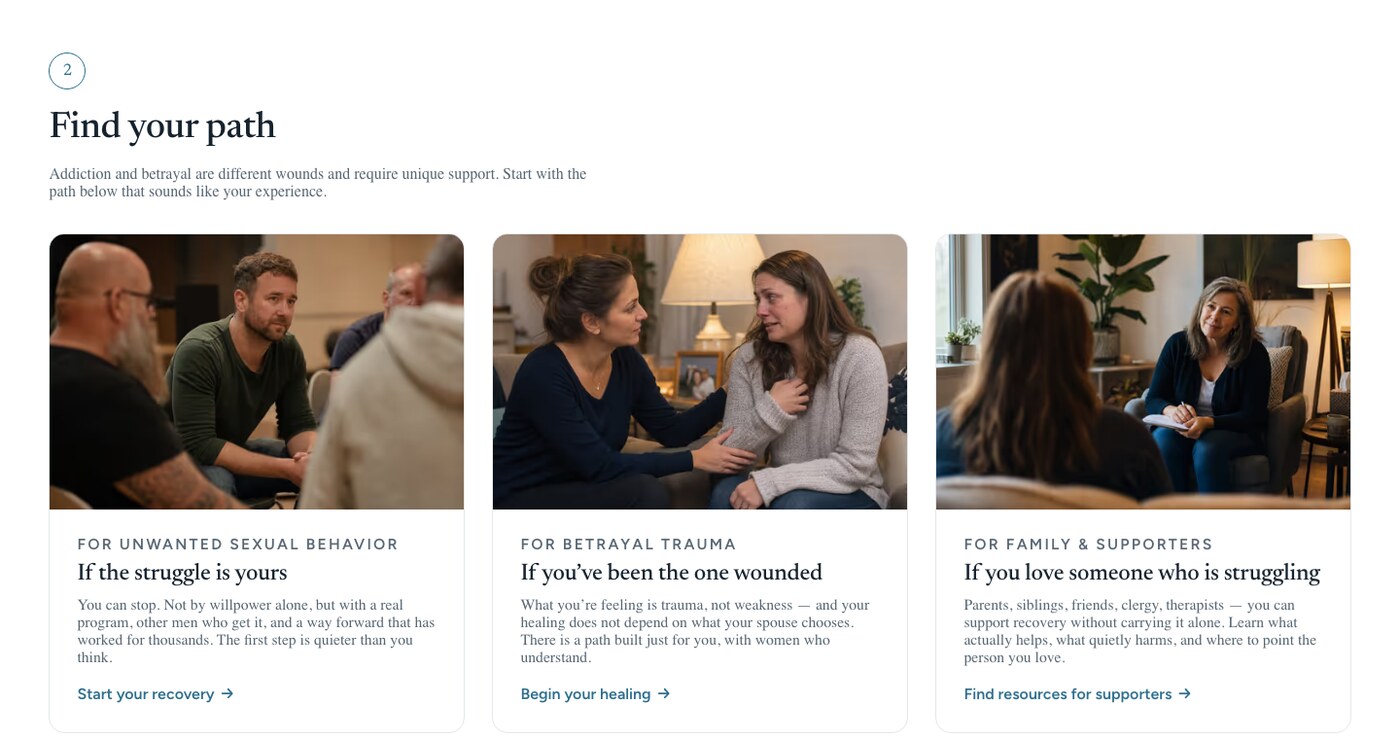
- Three paths, not one funnel. The homepage asks one question, which is who you are in this, and opens a separate path for each answer: for the person who is struggling, for the spouse who has been hurt, and for the family and friends around them. Addiction and betrayal are different wounds, and the site no longer treats them as one.
- Every page, reviewed by hand. More than 400 pages, posts, and podcast episodes moved onto the new design: every site page rebuilt on new templates or consolidated with a redirect, and nearly 350 blog, library, and podcast posts redesigned, with no old-design pages left. Each one went through review rounds and fixes before it shipped, the most-visited pages got a dedicated QA sweep, and every form was tested end to end.
- A calm visual system. A new type system and palette, art-directed imagery chosen with the foundation over several rounds, and a hero film that moves from night to dawn. The animation is lightweight, and visitors who prefer reduced motion or are saving data get a still image instead.
- Built for a sensitive audience. Copy leads with hope rather than the wound. Embedded videos load only when clicked and use YouTube's privacy-enhanced mode, so a visitor isn't handed a feed of recommendations. Members-only resources stay gated and out of search results. Color contrast and keyboard focus were checked across the site.
- A Spanish resources hub. Part of the foundation's audience speaks Spanish, so its Spanish resources were rebuilt into a proper hub, with Spanish pages for faith leaders and podcast episodes.
- A library people can read. About 240 blog and library posts were redesigned with reading-time estimates and topic filters. The podcast went from 22 episode pages to 104, each one synced automatically with a transcript, labeled speakers, and structured data for search.
- A current platform. PHP moved from 7.4 to 8.4 and WordPress to 7.0, with the redesign built as a custom site plugin on the existing theme so it stays maintainable on the foundation's managed host.
Status
Live at salifeline.org since September 2026. The earlier SEO work still sits underneath it: a cleaned-up technical backlog, rewritten titles and descriptions, an image library rebuilt by a small image service of our own, and a podcast archive that search engines can finally read.